
Welcome to California. Whether you came for the weather, the work, or the lifestyle, you've got 20 days to get your out-of-state vehicle registered here — and that includes a smog check before the DMV will issue you California plates.
Here's the full process, in order, with what to expect at each step.
Why California requires this
California has stricter emissions standards than almost any other state. Even if your vehicle just passed inspection in your previous state, California requires its own smog check before registering you. The state uses the smog inspection to verify your vehicle meets California's air quality standards.
This applies regardless of where you're moving from — Texas, New York, Arizona, anywhere. The previous state's inspection doesn't carry over.
California considers you a resident the day you take a job, register to vote, enroll kids in school, or claim residency for tax purposes — whichever comes first. From that point, you have 20 days to register your vehicle. Late fees start adding up after that.
Step 1: Get the smog check
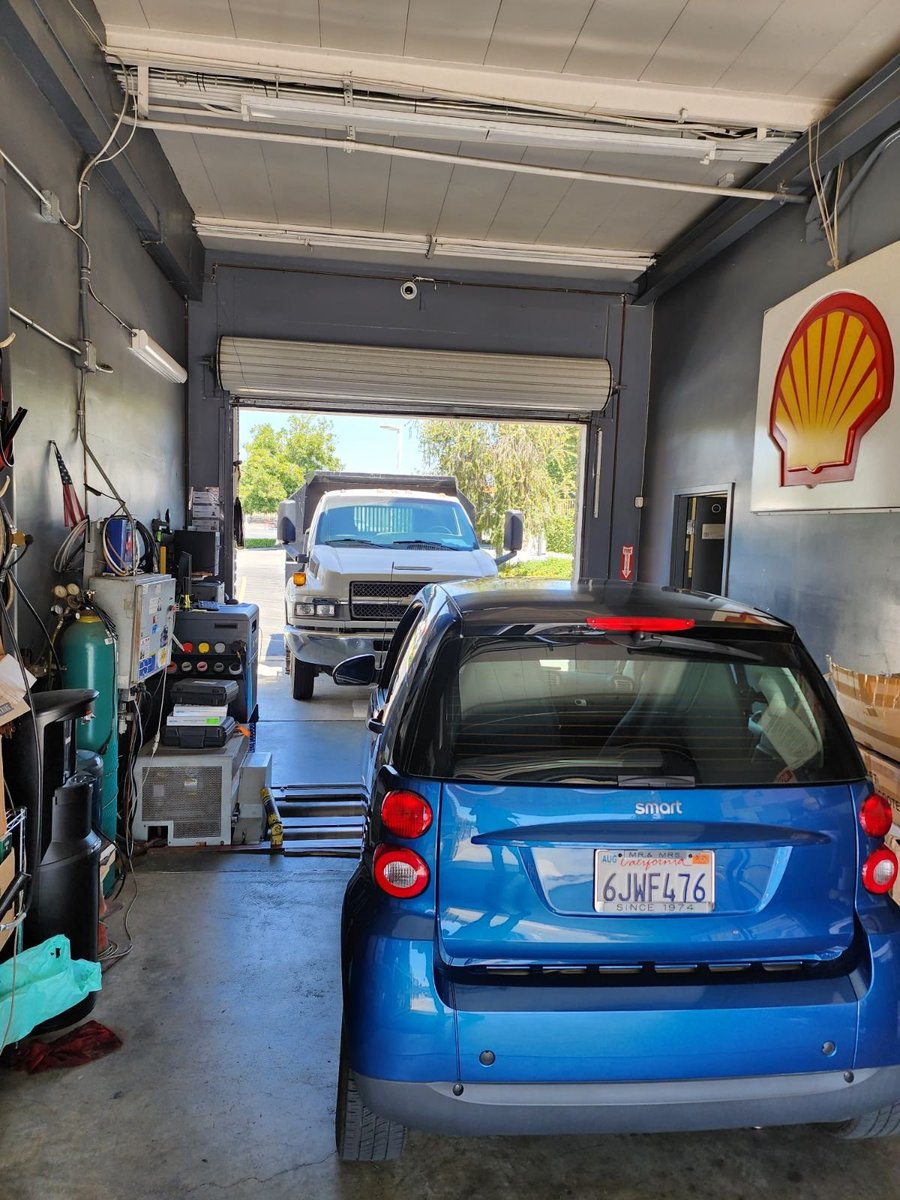
This is the part you control entirely. Bring your vehicle to a STAR-certified smog station (like ours in Simi Valley) and request an out-of-state smog test.
What to bring:
- Your out-of-state title or current registration
- Your driver's license (any valid US license is fine for now)
- Your vehicle's VIN
- Any emissions documentation from your previous state, if you have it
What it costs: Standard smog check pricing applies — bring our $10 OFF coupon for savings. Plus the $8.25 state certificate fee.
How long it takes: About 15 minutes for most vehicles, slightly longer for diesels.
What happens after: If the vehicle passes, we transmit the certificate electronically to the California DMV. There's nothing for you to mail or carry — just take a photo of the receipt as a backup, then move on to step 2.
Step 2: Get a VIN verification
Before the DMV can register an out-of-state vehicle, an authorized verifier needs to physically inspect the vehicle and confirm the VIN matches the title. This is called a VIN verification.
You have a few options for who can do this:
- The DMV itself — done at the same visit when you register. This is most common.
- CHP (California Highway Patrol) — required for some vehicles (typically older ones, salvage titles, or vehicles missing documentation)
- A licensed Vehicle Verifier — independent, can come to you, but costs $25–75
- AAA — for AAA members, may offer this as a member service
For most newer, clean-title vehicles, the DMV will do the VIN verification at your registration appointment. No separate trip needed.
Step 3: Visit the DMV
Now the actual registration. Make a DMV appointment online (don't walk in — wait times for walk-ins are brutal). At your appointment, bring:
- Out-of-state title (signed if there's a lien being released)
- Smog certificate confirmation (we already sent it to the DMV electronically — just have your receipt as backup)
- Proof of California auto insurance (you'll need to switch your insurance to California before this step)
- Driver's license (you'll likely also be doing your CA driver's license at the same time)
- Application for Title or Registration (Form REG 343) — you can fill it out at the office or download it ahead
- Payment for registration fees
The fee structure depends on your vehicle's value, age, and the county you live in. For most passenger vehicles in Ventura County, expect the first-time registration to run somewhere in the range of $200–600 depending on vehicle value.
Step 4: Get your plates and registration
If everything's in order, the DMV will issue your California plates and registration sticker on the spot. You can install the plates immediately and you're legal.
Common gotchas
"49-state" vehicles
If your vehicle is a model year 1976–1999 and was originally sold for non-California markets ("49-state" or "Federal" emissions specification), it may need additional inspection or modifications before California will register it. The first sign of this is usually a label under the hood or in the owner's manual indicating the emissions package. If you're unsure, the smog station can usually tell from your vehicle's VIN whether it's California-compliant.
Direct imports / gray-market vehicles
If your vehicle was imported directly (Japanese domestic market cars, for example), additional CARB compliance steps may be required. This is rare but worth knowing about if you have an unusual vehicle.
Vehicles less than 2 years old
Brand-new vehicles being registered in California for the first time may have extra fees related to the "new vehicle" designation. The vehicle still needs the smog check.
Diesel emissions
California has specific rules for diesel vehicles, especially older ones. Some out-of-state diesels may require additional verification (CARB compliance documentation, particulate filter status, etc.). If you have a diesel pickup, ask the smog station about California-specific requirements.
The whole process: realistic timeline
- Day 1: Get California car insurance (one phone call)
- Day 2-3: Smog check at our shop — 15 minutes
- Day 4-5: DMV appointment for registration — 1-2 hours
- Done: Plates and stickers issued same day
If your vehicle fails the smog check, add 1-2 weeks for repairs. With our coupon, the re-test is free within 30 days.
New to California? Welcome.
Drive in for your out-of-state smog check — 15 minutes, $10 OFF with coupon, certificate sent to DMV instantly.
Call (805) 526-9716One last thing
If you're settling in Simi Valley, Moorpark, Thousand Oaks, or anywhere in Ventura County, our shop on Sycamore Drive is conveniently located near the 118. We've helped thousands of new California residents through this process — we know the answers to the weird edge cases, and we'll let you know if anything about your vehicle needs special attention.
Welcome to California. We hope you love it here.